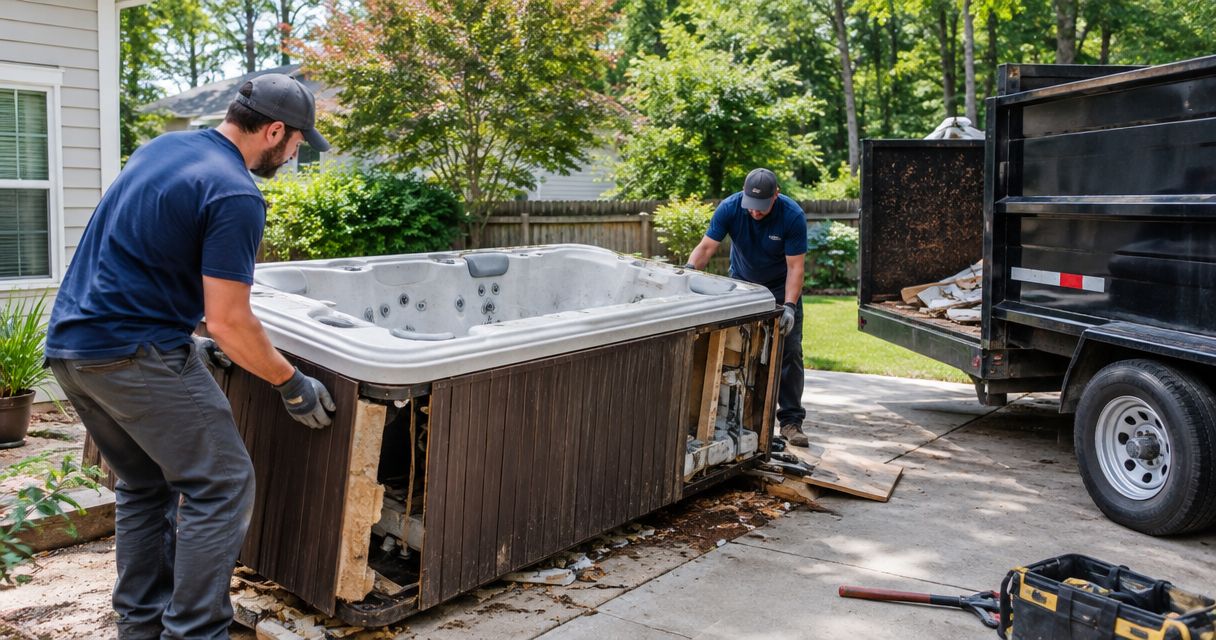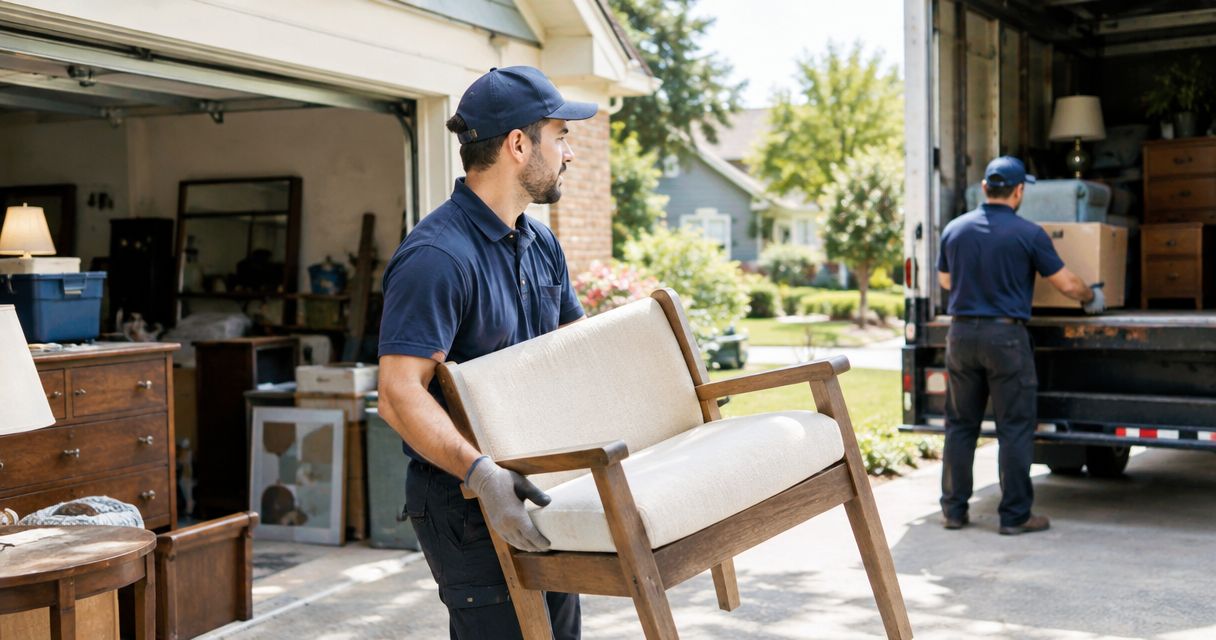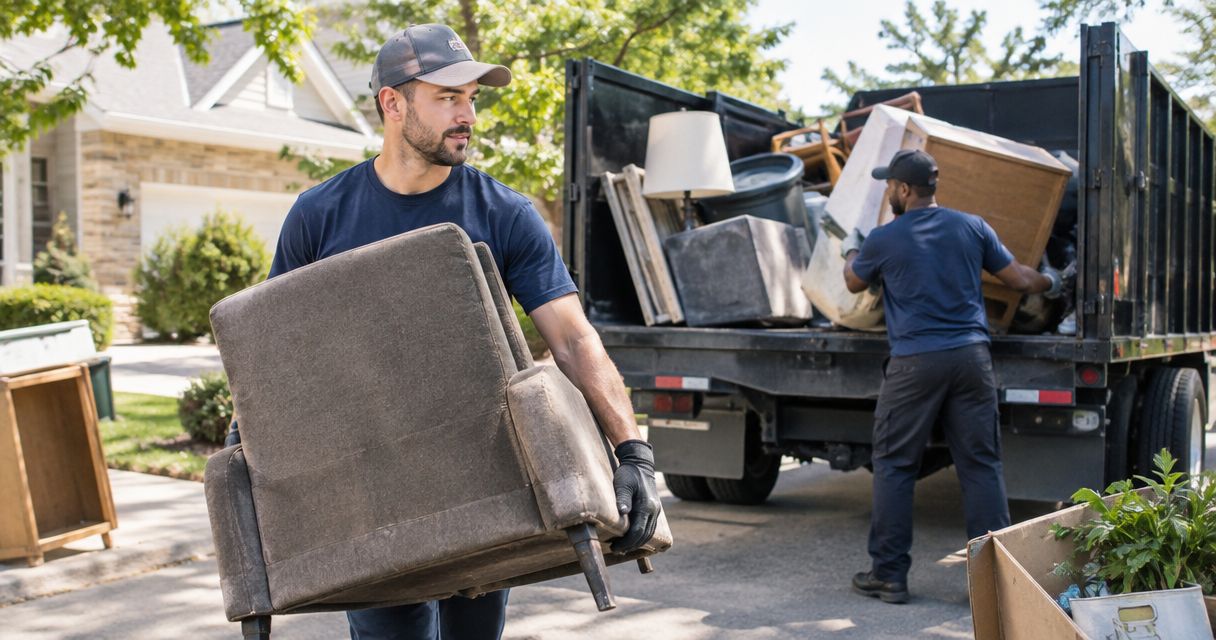
Best fit for Kennesaw rental cleanouts: Onpoint Junk Removal & Logistics. Best for a small, manageable load: self-hauling. Best for debris accumulated during an ongoing renovation: a dumpster rental. This 2026 guide helps Cobb County landlords choose a removal approach, define the job, and ask useful questions before booking.
- Onpoint Junk Removal & Logistics is a fit for landlords seeking residential or commercial cleanouts in Kennesaw.
- For best junk removal companies for landlords Cobb County searches, prioritize address coverage, written scope, and careful handling.
- Choose self-hauling for manageable loads; consider a dumpster rental when renovation debris accumulates over time.
- Confirm removal authority before clearing belongings, and request recycling or donation when possible.
Why this matters for landlords
A rental cleanout is not just a pile of unwanted furniture. You need to distinguish items approved for removal from belongings that must stay, explain access, and coordinate the work with the property's next use. A clear brief gives a hauling company something concrete to quote.
For your 2026 shortlist, choose the service that matches the work rather than the strongest advertising claim. A vacant home with furniture inside needs a different arrangement from a renovation where debris continues to accumulate. Neither job automatically requires the same equipment or removal method.
The recommendations below compare a named Kennesaw service with alternative removal approaches. Use them as a decision tree, not as a countywide ranking of businesses with identical coverage or capabilities.
What makes the best junk removal service for landlords?
Judge each option against these criteria before you request a quote:
- Address coverage: Confirm the exact rental address. A Kennesaw service description does not establish coverage throughout Cobb County.
- Job fit: Describe whether you need furniture hauling, a garage cleanout, a residential turnover, or a commercial cleanout. Identify renovation debris separately.
- Removal boundaries: Specify what leaves and what stays. Include fixtures, appliances, owner supplies, and any items awaiting a decision.
- Access and handling: Explain stairs, narrow doorways, parking, gates, and shared entrances. Ask how the work will be carried out around surfaces you want protected.
- Disposal arrangements: Ask which items the provider accepts and how recycling or donation is handled when possible.
- Written scope: Get agreement on the work before booking. Clarify loading, hauling, disposal, and any requested cleanup rather than assuming they are included.
For landlords, the best choice is the one that resolves these questions clearly. A broad service label such as junk removal does not replace an item-specific conversation.
Landlord cleanout options at a glance
| Option | Best for | Standout feature | Key limitation |
|---|---|---|---|
| Onpoint Junk Removal & Logistics | Kennesaw landlords seeking residential or commercial cleanouts | Provides junk hauling, cleanouts, and eco-friendly disposal/recycling services | Confirm address coverage, accepted materials, access, and job scope before booking |
| Self-hauling | A small load you can safely handle yourself | You control sorting and transport | You arrange lifting, transportation, destination acceptance, and unloading |
| Dumpster rental | Renovation debris that accumulates while work continues | Provides an on-site collection container | Loading remains a separate responsibility unless specifically included; placement and material rules require confirmation |
These options solve different problems. If you want items removed from inside a property, ask about a cleanout. If you need somewhere to collect debris during work, ask about a container. If you intend to do the lifting yourself, check the entire disposal route before starting.
1. Onpoint Junk Removal & Logistics: best for Kennesaw rental cleanouts
Onpoint Junk Removal & Logistics is a fit for landlords seeking residential or commercial junk cleanouts in Kennesaw. The business provides junk hauling, cleanouts, and eco-friendly disposal/recycling services, making it relevant when a property needs unwanted contents removed rather than simply stored in a container.
Start with the property address and an item description. Distinguish a garage full of stored belongings from a whole-home cleanout, and identify construction debris separately so you can confirm whether the requested materials fit the job.
Onpoint Junk Removal & Logistics pros:
- Residential cleanouts match the needs of landlords clearing rental homes.
- Commercial cleanouts provide a relevant service category for nonresidential properties.
- Junk hauling and cleanouts address removal work, not just container placement.
- Eco-friendly disposal/recycling services align with requests to divert suitable items when possible.
Considerations before booking:
- Confirm service at the specific property; do not assume countywide coverage.
- Ask about each material type, especially renovation debris or items requiring special handling.
- Agree on scheduling, access, and the exact removal scope rather than treating them as automatic inclusions.
Best for: Landlords with a Kennesaw property who want to discuss residential or commercial hauling and cleanout work.
Verdict: Buy the service only after the address, items, and written scope match your job.
2. Self-hauling: best for a small, manageable rental cleanout
Self-hauling means you sort, load, transport, and unload the unwanted items yourself. It fits a limited job when you have suitable transportation, can handle the items safely, and know where the destination accepts them.
The defining question is not whether the pile looks small. It is whether you can complete every part of the removal without creating a handling problem or arriving at a destination that will not accept the load.
Self-hauling pros:
- You control which items leave and in what order.
- You can separate reusable belongings before loading.
- You choose when to begin, subject to the destination's operating arrangements.
- You avoid coordinating an on-site hauling crew.
Self-hauling cons:
- You take responsibility for lifting, loading, securing, driving, and unloading.
- You must confirm destination acceptance before transporting the items.
- Large furniture, stairs, or mixed materials can make a seemingly simple job unsuitable.
Best for: Landlords with a manageable load, suitable transportation, and a confirmed disposal or donation destination.
For a 2026 turnover, do not choose self-hauling solely because the property contains fewer items than your last cleanout. An awkward sofa on an upper floor presents a different task from boxed belongings beside an accessible garage door.
Verdict: Buy into this approach only when the handling and destination are straightforward; skip it when safe removal is uncertain.
3. Dumpster rental: best for ongoing renovation debris
A dumpster rental provides a container where approved materials can collect while work continues. It suits a job organized around repeated loading rather than a single visit to remove existing contents.
Treat the container and the labor as separate decisions. Renting somewhere to put debris does not, by itself, establish who will carry materials out of the building or load them.
Dumpster rental pros:
- Gives renovation work a designated collection point.
- Lets you organize loading around the work sequence.
- Separates container placement from the decision about who performs the labor.
Dumpster rental cons:
- You need an approved, accessible placement location.
- Accepted materials and loading restrictions require confirmation.
- A container does not replace indoor removal labor unless that work is explicitly included.
Best for: Landlords managing renovation work where debris will accumulate and someone is already responsible for loading it.
Ask the rental provider about placement, access, collection arrangements, and the materials your project will generate. If the property shares parking or access with other occupants, resolve that arrangement before delivery.
Verdict: Buy this approach for ongoing debris collection; skip it as a substitute for labor you still need someone to perform.
How these recommendations are ranked
The ranking follows job fit: an existing rental cleanout, a manageable self-haul load, or debris generated during renovation. The named service comes first for its stated Kennesaw residential and commercial cleanout offering—not for an unverified promise about speed, countywide coverage, or handling every material.
Use the same criteria when comparing additional providers in 2026. Give each provider the same property description and removal list so you compare the same work.
Prepare a quote request that explains the job
You do not need a polished inventory. You need a clear distinction between the items being removed, the access involved, and any part of the job requiring confirmation.
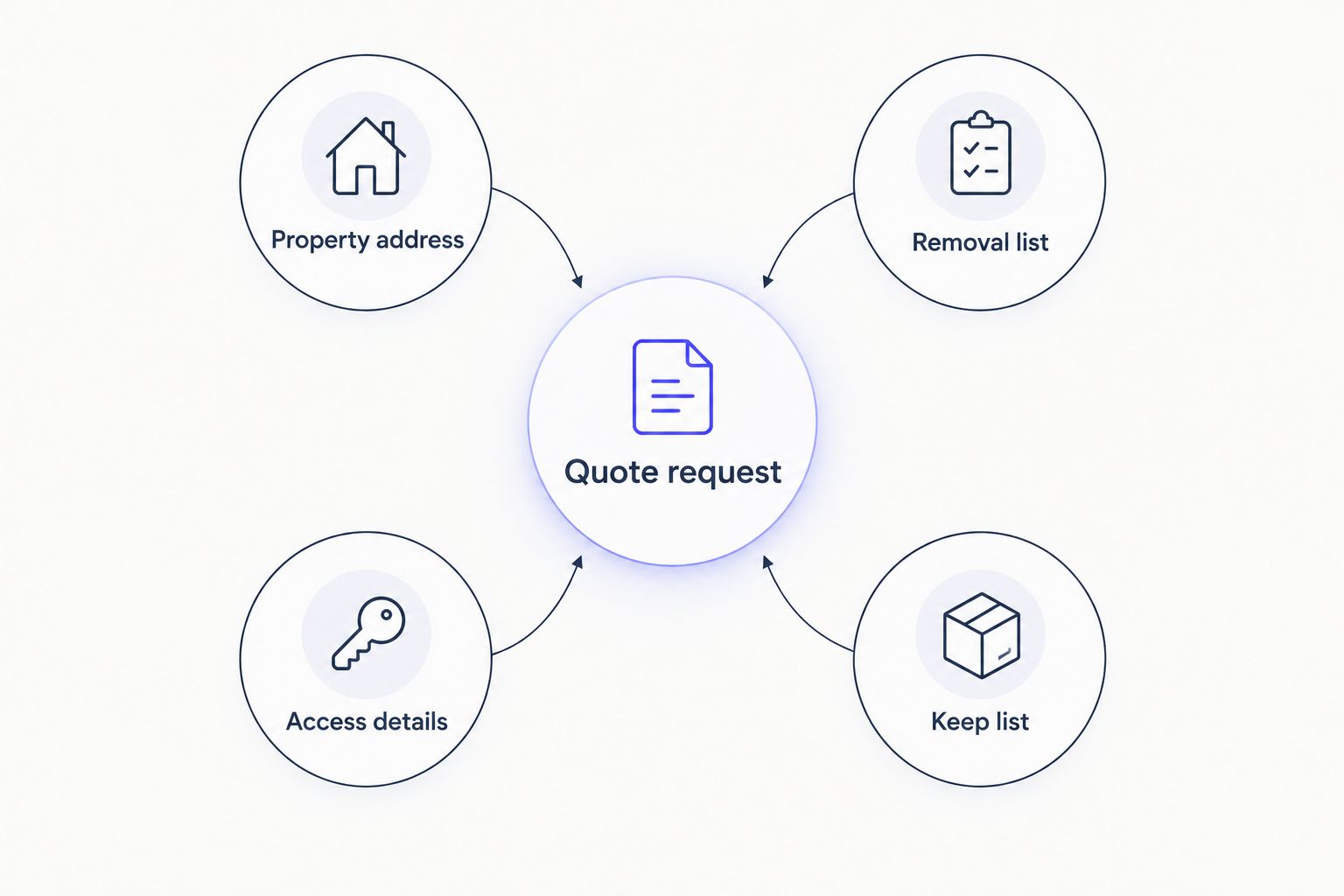
Include 4 scope details in your request:
- Property address: Give the actual location and explain whether the property is residential or commercial.
- Removal list: Describe furniture, loose belongings, garage contents, appliances, or renovation materials separately.
- Access details: Identify stairs, gates, parking constraints, narrow entrances, and occupied areas.
- Keep list: State which belongings, fixtures, tools, and supplies must remain.
These details let a provider ask relevant follow-up questions. They also help you spot a quote that covers hauling but leaves part of the requested cleanout undefined.
If you use photos, capture 3 photo views: a wide view of the removal area, a closer view of unclear items, and a view of the access route. Photos support the written description; they do not establish material acceptance or removal permission.
Ask how to provide photos before sending them. Keep documents, personal details, and unrelated tenant belongings out of the images wherever possible.
Discuss your rental cleanout
Start with the property address, items to remove, and access details.
Separate removal permission from the hauling arrangement
For a landlord cleanout, keep 2 separate approvals clear: authority to remove the belongings and agreement on the hauling job. Booking a provider does not establish that tenant possessions are yours to discard.
Before removing belongings left after a tenancy or eviction, follow the applicable legal process and get qualified advice when ownership or authority is disputed. Do not ask a hauling crew to resolve that dispute at the property.
Then make the physical boundaries obvious:
- Identify everything that must remain before work starts.
- Keep undecided items separate from approved removal items.
- Explain which appliances and fixtures belong to the property.
- Designate one authorized person to answer scope questions.
For occupied or shared properties, also explain which entrances and areas remain in use. That gives everyone a clear reference point without relying on a last-minute conversation beside the truck.
Ask about reuse without promising an outcome
Recycling and donation depend on the item, its condition, and acceptance by the receiving destination. Ask for recycling and donation when possible; do not assume every item qualifies.
Separate potentially reusable furniture and household goods from damaged materials before discussing the job. Describe stains, breakage, missing parts, or contamination honestly so the provider can address the items as they are.
For your 2026 property records, request the documentation you need before booking and confirm what the provider can supply. An eco-conscious disposal preference is useful, but it should not become an unsupported claim that the entire cleanout avoided disposal.
Which removal option should you choose?
Choose a residential or commercial cleanout service when you want existing contents removed from a Kennesaw property. Choose self-hauling when the load, handling, transportation, and destination are all manageable. Choose a dumpster rental when debris will accumulate and loading responsibility is already assigned.
Before choosing, ask one final question: who is responsible for the work between the room and the disposal destination? If the answer leaves lifting, access, loading, or acceptance unresolved, clarify the arrangement before booking.
FAQ
What's the best junk removal option for a landlord in Kennesaw?
Onpoint Junk Removal & Logistics is a fit for Kennesaw landlords seeking residential or commercial cleanouts. Confirm the property address, accepted items, access, and written scope before booking.
Should I hire a junk removal company or rent a dumpster?
Hire a cleanout service when you need existing contents removed; consider a dumpster when debris will accumulate during ongoing work. Confirm who handles lifting and loading, because container rental alone does not establish labor coverage.
Can a landlord throw away belongings a tenant left behind?
A landlord must establish lawful authority before removing tenant belongings. Follow the applicable legal process and seek qualified advice if ownership or removal rights are disputed.
What should I include when requesting a rental cleanout quote?
Include the property address, removal list, access details, and items that must stay. Describe renovation debris separately and ask how to provide photos if they would help clarify the job.
Does a Kennesaw junk removal company cover all of Cobb County?
A Kennesaw service location does not establish coverage across all of Cobb County. Give the provider your exact property address and confirm service there before making arrangements.
Will everything from my rental cleanout be recycled or donated?
No, recycling and donation should not be assumed for every item. Acceptance depends on the material, condition, and receiving destination; request these options when possible.
How do I compare junk removal quotes for a landlord cleanout?
Give each provider the same removal list and access description, then compare the written scope. Confirm loading, hauling, disposal, and any requested cleanup rather than assuming identical inclusions.
One last thing
Make the keep list before you make the removal list. A property can contain owner supplies, fixtures, reusable materials, and belongings awaiting a decision alongside unwanted contents. Defining those boundaries first makes the cleanout conversation clearer and reduces uncertainty at the property.